
Fabian Stephany, Dr.
Fabian Stephany ist assoziierter Forscher im Forschungsschwerpunkt Innovation, Unternehmertum und Gesellschaft. Ebenso forscht er als Ökonom und Datenwissenschaftler Oxford Internet Institute (OII) der University of Oxford. Mit seinem aktuellen Projekt zur Zukunft der Arbeit untersucht Fabian, wie wir in Zeiten des technologischen Umbruchs durch datengetriebene Umschulung nachhaltigere Arbeitsplätze schaffen können.
Er ist Mitbegründer des Online Labour Observatory – einem digitalen Hub, der vom OII und der Internationalen Arbeitsorganisation gehostet wird und Forschern, politischen Entscheidungsträgern, Journalisten und der Öffentlichkeit zu Verfügung steht, die sich für die Arbeit auf Online-Plattformen interessieren. Seine Forschung wurde in führenden akademischen Zeitschriften veröffentlicht und von der Washington Post, der New York Times, dem Telegraph, The Statesman, Nikkei Asia und anderen populären Medien auf der ganzen Welt aufgegriffen.
Als Ökonom und selbstständiger Data Scientist hat Fabian Stephany bereits für verschiedene internationale Organisationen, wie den Wiener Think Tank Agenda Austria, das Entwicklungshilfeprogramm der Vereinten Nationen oder die OECD in Paris, gearbeitet. Er hat Wirtschaftswissenschaften und Sozialstatistik an unterschiedlichen Europäischen Universitäten studiert, wie der Universitá Bocconi in Mailand und der Universität von Cambridge.
 Entrepreneurship & Innovation · Science Engagement
Digitalisierung und Klima
Das Forschungsprojekt „Digitalisierung und Klima” untersucht die ökonomischen, ökologischen & sozialen Dimensionen einer nachhaltigen Digitalwirtschaft. Entrepreneurship & Innovation · Science Engagement
Digitalisierung und nachhaltiges Unternehmertum
Das Forschungsprojekt „Digitalisierung und Unternehmertum” untersucht nachhaltiges digitales Unternehmertum, die Gig Economy und Zukunft der Arbeit. Gesellschaft & Kultur · Politik & Recht
Wahlkompass Digitales 2021
Der Wahlkompass Digitales zeigt die Positionierungen der Parteien zu Fragen der Digitalpolitk in der Bundestagswahl 2021. Entrepreneurship & Innovation
Datenkooperations-Plattformen für den Mittelstand
Das Projektteam untersucht, inwiefern KMU in der Lage sind digitale Plattformen zu betreiben und für sich zu nutzen. Entrepreneurship & Innovation · Gesellschaft & Kultur · KI
Künstliche Intelligenz und Wissensarbeit – Implikationen, Möglichkeiten und Risiken
Dieses Forschungsprojekt untersucht den Einsatz von KI am Arbeitsplatz von Wissensarbeiter*innen in Deutschland.
Journal articles and conference proceedings (17)
McCarthy, P., Gong, X., Braesemann, F., Stephany, F., Rizoiu, M.-A., & Kern, M. L. (2023). The impact of founder personalities on startup success. Scientific Reports, 13(1), 1-12. Weitere Informationen
Ehlinger, E. G., & Stephany, F. (2023). Finding Talent for the Twin Transition: Are UK Firms Shifting Towards Skill-Based Hiring for AI and Green Jobs? SSRN. Weitere Informationen
Lorenz, H., Stephany, F., & Kluge, J. (2023). The future of employment revisited: how model selection affects digitization risks. Empirica, 50(2), 323-350. Weitere Informationen
Salem, H., Stephany, F. (2023). Wikipedia: a challenger’s best friend? Utilizing information-seeking behaviour patterns to predict US congressional elections. Information, Communication & Society, 26(1), 174-200. Weitere Informationen
Salem, H., & Stephany, F. (2022). Wikipedia: a challenger’s best friend? Utilizing information-seeking behaviour patterns to predict US congressional elections. Information, Communication & Society, 1-20. DOI: 10.1080/1369118X.2021.1942953 Weitere Informationen
Stephany, F. (2021). One size does not fit all: Constructing complementary digital reskilling strategies using online labour market data. Big Data & Society, 8(1). DOI: 10.1177/20539517211003120 Weitere Informationen
Kässi, O., Lehdonvirta, V., & Stephany, F. (2021). How many online workers are there in the world? A data-driven assessment. Open Research Europe. DOI: 10.12688/openreseurope.13639.4 Weitere Informationen
Stephany, F., Kässi, O., Rani, U., & Lehdonvirta, V. (2021). Online Labour Index 2020: New ways to measure the world’s remote freelancing market. Big Data & Society. DOI: 10.1177/20539517211043240 Weitere Informationen
Stephany, F., Braesemann, F., & Graham, M. (2020). Coding together – coding alone: the role of trust in collaborative programming. Information, Communication & Society, 1-18. DOI: 10.1080/1369118X.2020.1749699 Weitere Informationen
Stephany, F., Dunn, M., Sawyer, S., & Lehdonvirta, V. (2020). Distancing Bonus Or Downscaling Loss? The Changing Livelihood of US Online Workers in Times of COVID-19. Journal of Economic and Social Geography. DOI: 10.1111/tesg.12455 Weitere Informationen
Stephany, F. (2020). It’s not only size that matters: determinants of Estonia’s e-governance success. Electronic Government, 16(3), 304-313. Weitere Informationen
Braesemann, F., & Stephany, F. (2020). Between Bonds and Bridges: Evidence from a Survey on Trust in Groups. Social Indicators Research, 1-18. DOI: 10.1007/s11205-020-02471-z Weitere Informationen
Salem, H., & Stephany, F. (2020). Wikipedia: A Challenger’s Best Friend? Utilising Information-seeking Behaviour Patterns to Predict US Congressional Elections. SSRN. Weitere Informationen
Darius, P., & Stephany, F. (2019). „Hashjacking“ the Debate: Polarisation strategies of Germany’s political far-right on Twitter. International Conference on Social Informatics, Springer, Cham.. DOI: 10.31235/osf.io/6gbc9 Weitere Informationen
Stephany, F., Braesemann, F., & Graham, M. (2019). Coding Together-Coding Alone: The Role of Trust in Collaborative Programming. Information, Communication, and Society, under revision. Weitere Informationen
Stephany F. (2019). Everything You Always Wanted to Know About AI – Nowcasting Digital Skills with Wikipedia. SocArXiv. DOI: 10.31235/osf.io/rfzdq Weitere Informationen
Stephany, F., Abel, G, J., & Muttarak, R. (2019). Learning About Internal Migration from Half a Billion Records – Applying Localised Classification Trees to Large-scale Census Data. SocArXiv. DOI: 10.31235/osf.io/bz6yu Weitere Informationen
Book contributions and chapters (2)
Stephany F., & Teutloff, O. (2026). AI Skills Wanted: How AI Technologies Create Demand for Skilled Workers. In J. M. Lavista Ferres (Ed.), Degrees of Change: What AI Means for Education and the Next Generation (pp. 79-93). Hoboken, United States: John Wiley & Sons. DOI: 10.1002/9781394413096.ch7Digital Object Identifier (DOI) Weitere Informationen
Stephany, F. (2021). The digital transformation of industry and the world of work. In International Labour Organization (Eds.), World Employment and Social Outlook 2021: The role of digital labour platforms in transforming the world of work. Geneva, Switzerland: International Labour Office – Geneva: ILO. Weitere Informationen
Working paper (19)
Stephany, F., & Luckin, R. (2022). Is the workforce ready for the jobs of the future? Data-informed skills and training foresight. Bruegel Working Paper. Weitere Informationen
Laux, J., Stephany, F., Russell, C., Wachter, S., & Mittelstadt, B. (2022). The Concentration-after-Personalisation Index (CAPI): Governing Effects of Personalisation Using the Example of Targeted Online Advertising. SSRN. DOI: 10.2139/ssrn.4084457 Weitere Informationen
Kässi, O., Lehdonvirta, V., & Stephany, F. (2021). How Many Online Workers are there in the World? A Data-Driven Assessment. EconPapers. Weitere Informationen
Stephany, F. (2021). When does it pay off to learn a new skill? Revealing the complementary benefit of cross-skilling. SocArXiv Papers. DOI: 10.31235/osf.io/sv9de Weitere Informationen
Braesemann, F., Stephany, F., Teutloff, O., Kässi, O., Graham, M., & Lehdonvirta, V. (2021). The polarisation of remote work. Available at SSRN. DOI: 10.2139/ssrn.3919655 Weitere Informationen
Stephany, F., & Lorenz, H. (2021). The future of employment revisited: how model selection determines automation forecasts. arXiv preprint. Weitere Informationen
Salem, H., & Stephany, F. (2021). Wikipedia: a challenger’s best friend? Utilizing information-seeking behaviour patterns to predict US congressional elections. Information, Communication & Society. DOI: 10.1080/1369118X.2021.1942953 Weitere Informationen
Krell, T., Braesemann, F., Stephany, F., Friederici, N., & Meier, P. (2020). A Mixed-Method Landscape Analysis of SME-focused B2B Platforms in Germany. Social Science Research Network. Weitere Informationen
Sawyer, S., Dunn, M., Munoz, I., Stephany, F., Raheja, R., Vaccaro, G., & Lehdonvirta, V. (2020). Freelancing Online During the COVID-19 Pandemic. Microsoft New Future of Work. Weitere Informationen
Braesemann, F., & Stephany, F. (2020). Social media self-branding and success: Quantitative evidence from a model competition. arXiv.org > cs > arXiv:2007.04113. Weitere Informationen
Braesemann, F., & Stephany, F. (2020). Measuring Digital Development with Online Data: Digital Economies in Eastern Europe and Central Asia. SocArXiv Papers. DOI: 10.31235/osf.io/f9jqh Weitere Informationen
Dunn, M., Stephany, F., Swayer, S., Munoz, I., Raheja, R., Vaccaro, G., & Lehdonvirta, V. (2020). When Motivation Becomes Desperation: Online Freelancing During the COVID-19 Pandemic. SocArXiv Papers. DOI: 10.31235/osf.io/67ptf Weitere Informationen
Stephany, F. (2020). There is Not One But Many AI: A Network Perspective on Regional Demand in AI Skills. OSFPREPRINTS. DOI: 10.31219/osf.io/32qws Weitere Informationen
Stephany, F., Stoehr, N., Darius, P., Neuhäuser, L., Teutloff, O., & Braesemann, F. (2020). The CoRisk-Index: A data-mining approach to identify industry-specific risk assessments related to COVID-19 in real-time. arXiv preprint arXiv:2003.12432. Weitere Informationen
Salem, H., & Stephany, F. (2020). Wikipedia: A Challenger’s Best Friend? Utilising Information-seeking Behavior patterns to Predict US Congressional Elections. arXiv. Weitere Informationen
Darius, P., & Stephany, F. (2020). How the Far-Right Polarises Twitter: ‚Highjacking‘ Hashtags in Times of COVID-19. arXiv. Weitere Informationen
Stephany, F. (2020). Does it Pay Off to Learn a New Skill? Revealing the Economic Benefits of Cross-Skilling. arXiv:2020.11841. Weitere Informationen
Stephany F. (2019). ‘It’s not only size that matters: determinants of Estonia’s e-governance success’. Electronic Government. Weitere Informationen
Schmeiss, J., Stephany, F., & Tech, R. (2019). The Business Model as Mediator during Socio-Technical Transitions – Empirical Evidence from Applied AI Technology Startups in the Energy and Transportation Sector. SocArXiv. DOI: 10.31235/osf.io/zuhq4 Weitere Informationen
Other publications (14)
Stephany, F., Braesemann, F., Stoehr, N., Darius, P., Teutloff, O., & Neuhäuser, L. (2022). Quo Vadis, CoRisk-Index? Oxford Internet Institute Blog. Weitere Informationen
Stephany, F. (2022). Big challenges and big data – Making climate-induced migration visible with machine learning. Oxford Internet Institute Blog. Weitere Informationen
Klausing, S., & Stephany, F. (2022). Is tech ‘taking over’? How the online workforce shifts towards tech work. Online Labour Observatory. Weitere Informationen
Stephany, F. (2021). Germany: Hidden Champion of Online Platform Work? Digital Society Blog. Weitere Informationen
Stephany, F. (2020). Science Without a Question. Elephant in the Lab. Weitere Informationen
Stephany, F. (2020). Pandemic’s effects on online freelance work: Distancing devidend or downscaling loss. iLabour Blog OII. Weitere Informationen
Stephany, F. (2020). The pandemic depresses online labour markets, but some countries are bouncing back – Insights from South Korea, Germany, and the United States. iLabour Blog OII. Weitere Informationen
Stephany, F., Braesemann, F., Stoehr, N., Darius, P., Teutloff, O., & Neuhäuser, L. (2020). How worried are businesses about COVID-19? A novel indicator measures industry-specific risk assessments in times of the pandemic. OII Blog. Weitere Informationen
Stephany, F., Lehdonvirta, V., Dunn, M., & Sawyer, S. (2020). Pandemic-proof jobs? IT freelancers in high demand, other online workers facing cuts. iLabour Blog OII. Weitere Informationen
Stephany, F. (2020). Beyond Contact-Tracing Apps – How Trust Shapes E-Governance. OII Blog. Weitere Informationen
Braesemann, F., & Stephany, F. (2020). Why the Digital Society needs the Open Society. OII Blog. Weitere Informationen
Salem, H., & Stephany, F. (2020). Wikipedia: A Challenger’s Best Friend? OII Blog. Weitere Informationen
Stephany, F., & Darius, P. (2020). Hijacking Hashtags in Times of COVID-19: How the Far-Right Polarises Twitter. OII Blog. Weitere Informationen
Friederici, N., Krell, T., Meier, P., Braesemann, F., & Stephany, F. (2020). Plattforminnovation im Mittelstand, . Weitere Informationen
Lectures and presentations (13)
Is the Future of Work Online? Exploring the Global Online Gig Economy
Lecture: Resilience of the workforce in the digital age
Closing the Digital Skill Gap: The Potential of Online Platform Data for Active Labour Market Policies
Talk: Online Labour Index 2020: New ways to measure the world’s remote freelancing market
Online Labour Index 2020: New ways to measure the world’s remote freelancing market
British Council ‚Knowledge is GREAT‘ lecture: Is the future of work online?
Is the Future of Work Online? Why Online Labour Platforms Act as Skill-Laboratories
Brown Bag Seminar
Complex Networks Conference
Platform Economy Interest Group
DAAD Alumni Annual Meeting 2019
1st Winter School – Complexity Science Hub Vienna
Panels (3)
Remote Working During the Pandemic I: Experiences from different continents
The Digital Economy Post COVID-19: Global Outlook and Local Contexts
Digital Economy in the Western Balkans: Trends and Implications in Online Labour
Moderation of workshops and panels (3)
Multi-stakeholder dialogue: Towards a fairer online platform economy in Kenya
Workshop on Web Scraping
Big data and labour markets: Understanding precariousness
Organisation of events (10)
Digitaler Salon: Von Gig zu Gig
Online Roundtable Discussion: How can we accelerate the production and adoption of e-government services in Morocco?
Lunch Talk Series I Digitalisation, Sustainability & Entrepreneurship
Panel discussion: Towards a Fairer Online Platform Economy in Kenya
Multi-stakeholder dialogue: Towards a Fairer Online Platform Economy in Kenya
Panel discussion: The future of online labour markets and regulation of the platform economy
Multi-stakeholder dialogue: Policies Towards Fairer Online Gig-Work
Research sprint: Sustainable Digital Economies
Digitaler Salon: Digitale Gesellschaft: Nerds Only?
Is the future of work online?
Nominations (1)
Sonja Köhne, Fabian Stephany, Philip Meier, Miriam Wolf, Christoph Gerling
Participation as expert (1)
Analyse von Online Stellenanzeigen
- 12.11.25 HANDELSBLATT
Ab 2028 verändert KI täglich 150.000 Arbeitsplätze
- 10.03.25 TAGESSPIEGEL BACKGROUND
Aus der Angst heraus zum Aufschwung: Wie KI unsere Kompetenzen neu definiert
- 27.02.24 HANDELSBLATT
Stephany im Interview: „KI-Skills bringen so viel wie ein Doktortitel“
- 25.02.24 HANDELSBLATT
Berufliche Fortbildung. Warum der Umgang mit KI die neue Schlüsselqualifikation ist
- 26.09.23 TAZ
Debatte um Technologieregulierung: Klimaschutz als Vorbild für KI
- 15.06.23 ORF OE1
Wie Künstliche Intelligenz die Arbeitswelt verändert
- 25.05.23 ORF Ö1 MATRIX
KI
- 23.03.22 THE SOUND OF ECONOMICS PODCAST
The Sound of Economics Podcast: “Online Labour: Can we all just move to Tahiti?”
- 15.02.22 BE:CURIOUS PODCAST FROM THE BERLIN UNIVERSITY ALLIANCE
BE:CURIOUS Podcast from the Berlin University Alliance
- 27.05.20 PODCAST STREITBAR DER FRIEDRICH-NAUMANN-STIFTUNG
Streitbar Extra – Wie unsere Stipendiaten den Kampf gegen Corona aufnehmen
- 26.05.20 INSIDE SCOOP PODCAST
The Digital Workforce with University of Oxford’s Fabian Stephany
- 30.04.20 WASHINGTON POST
Crisis begins to hit professional and public-sector jobs once considered safe
- 04.04.20 WIRTSCHAFTSWOCHE
So steht der Pegel der Corona-Angst
Medien
Superpower Skills – The Role of Skills in Times of Technological Change
Keynote: Friedrich Ebert Stiftung und AK Österreich - 2023
The Role of Skills in Times of AI
Keynote: Economics of AI conference Vienna - 2023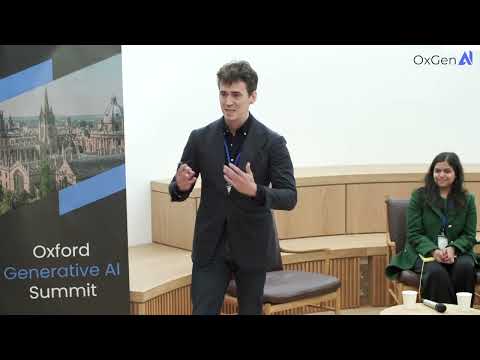
Generative AI and the Future of Work
Talk: GenAI Summit Oxford 2023
Digital Salon 2022: “From Gig to Gig”
Digitaler Salon am HIIG 2023

Position
Assoziierter Forscher: Innovation, Unternehmertum & Gesellschaft

Innovation, Unternehmertum und Gesellschaft
Themen: KI & Arbeit, Internet-Ökonomie, Digitale Plattformarbeit, Plattformwirtschaft, Zukunft der