

Generative AI in the world of work
With the release of ChatGPT, the potential of generative artificial intelligence (AI) has become tangible to the general public. AI-based chatbots, such as OpenAI's GPT-4, can be used in a variety of ways: they search, analyse and summarise information. They can also generate and revise ideas, text or code for us. The high technological maturity of these AI applications and their versatility make them extremely important for the world of work. In knowledge-intensive professions, generative AI promises more time for creative activities thanks to efficiency gains. On the negative side, however, its use can also lead to the devaluation of human skills or even their replacement. Questions remain about the possible new skills that workers will need when working with generative AI.
For this reason, the research project "Generative Artificial Intelligence in the World of Work" (GENKIA) is investigating the significance of generative AI for individuals, organisations and professions. Its aim is to capture the experiences of workers with generative AI and to analyse possible impacts on employment and quality of work. We will also explore the conditions under which work processes can be supported by the use of generative AI.
The project is a collaboration between the Alexander von Humboldt Institute for Internet and Society (HIIG), the Weizenbaum Institute and the Berlin Social Science Center (WZB). It is funded by the German Federal Ministry of Labour and Social Affairs (BMAS).
Research
Generative AI will have a significant impact on knowledge work in particular. Therefore, the research project focuses on five socially relevant domains in which generative AI systems are already being applied:
Marketing
Human Resource Management
Programming
Journalism
Public Administration
Gather detailed insights into the user experience of workers with generative AI
Analyse the impact of generative AI on employment and quality of work
Develop of recommendations for good working practices with generative AI
„Generative AI is often perceived as conflicting by employees. For example, ChatGPT can save research time, but it can also create additional work, such as fact-checking. The exact impact of the technology is still largely unexplored and depends on the context of its use. Therefore, in this project we investigate how and with what consequences generative AI is used, with a particular interest in its significance for knowledge-intensive and creative professions such as marketing. We also highlight the importance of organisational and institutional frameworks and develop design options for the responsible use of generative AI.“
Dr. Georg von Richthofen
„HR professionals are not only using generative AI in their own processes, such as in chatbots or for creating interview or offboarding questions, but they are also faced with potential changes in the workforce as a result of the technology. For example, will generative AI change the way employees learn or acquire internal knowledge? Are there risks in handling confidential information that require policies or company agreements? The GENKIA project aims to answer these and other questions.“
Sonja Köhne
„Generative AI is a versatile, general-purpose technology whose use opens up space for many complementary innovations - for example, in organisation. At the same time, the use of this technology requires a variety of changes in the environment, allowing us to examine a potentially profound transformation of the business landscape in the context of generative AI. In this context, we see a coexistence of societal and technical advances and significant challenges, underscoring the importance of a cautious and well-informed approach.“
Prof. Dr. Hendrik Send
Results in dialogue
We communicate the results of the project to academics, policymakers, businesses, public institutions and the general public in ways tailored to each target group. In addition to scientific formats, these include blog articles, policy dialogues and public events. The focus is on the timely transfer of initial project results into the political discourse on the design and regulation of generative AI, in close coordination with the Policy Lab Digital, Work & Society of the BMAS.
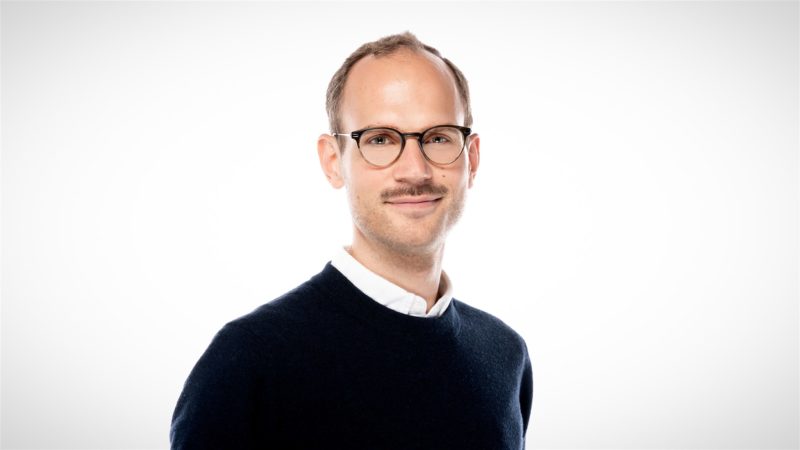 Georg von Richthofen, Dr.Senior Researcher: Innovation, Entrepreneurship & Society
 Hendrik Send, Prof. Dr.Associated Researcher: Innovation, Entrepreneurship & Society
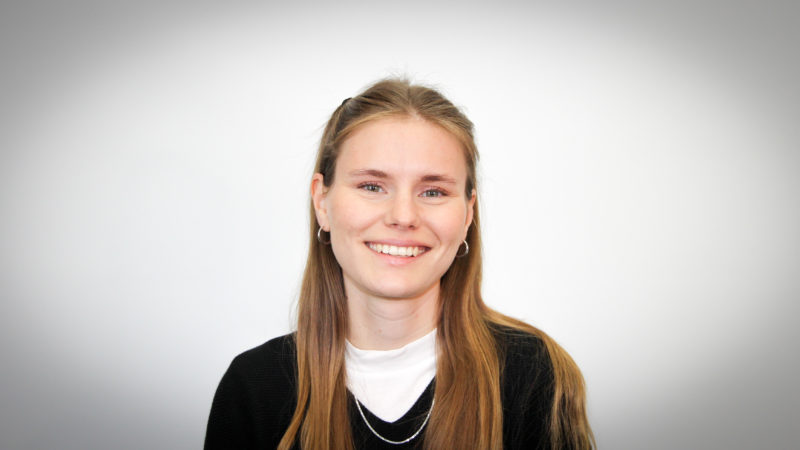 Nele BußStudent Assistant: Innovation, Entrepreneurship & Society
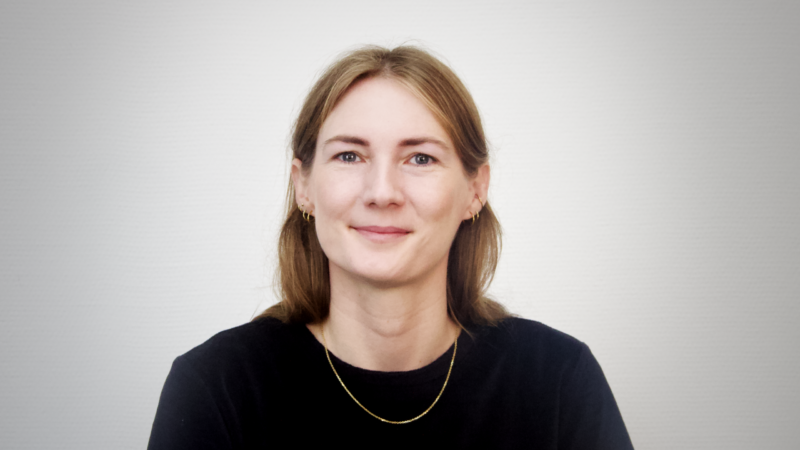 Sonja Köhne
Journal articles and conference proceedings
von Richthofen, G., Koehne, S., & Golf-Papez, M. (2027). Adapting to generative AI in creative work: a technological frames perspective on creative advertising. Journal of Business Research. DOI: 10.1016/j.jbusres.2026.116483 Publication details
von Richthofen, G., & Culiberg, B. (2025). Corporate digital (ir)responsibility in the sharing economy: mobilizing the VBA framework. International Journal of Contemporary Hospitality Management. DOI: https://doi.org/10.1108/IJCHM-12-2024-1883 Publication details
Zeller-Lanzl, J., Bohn, S., von Richthofen, G., Körner, M.-F., & Gümüşay, A. A. (2025). Essay 3: Fostering Interdisciplinary Impact Around the Potentialities of (Ir)Responsibility In and Through Digitalization. Schmalenbach Journal of Business Research, 28-45. DOI: https://doi.org/10.1007/s41471-025-00234-5 Publication details
Book contributions and chapters
Humayun, M., von Richthofen, G., & Golf-Papez, M. (2026). Going Analogue in a Post-digital Society. In Mark Tadajewski, Matthew Higgins, Janice Denegri-Knott, Rohit Varman, The Routledge Companion to Critical Marketing (pp. 597-609). London: Routledge. Publication details
Ohliger, U., Winter, J., von Richthofen, G., Gümüşay, A. A., & Hünsche, M. (2025). Menschengerechte Arbeitswelt und ressourceneffizientes Wirtschaftswachstum durch KI – Potenziale für den nachhaltigen Technologieeinsatz. In N. Fabisch, R. Schmidpeter, G. Schuster, & A. Sihn-Weber (Eds.), Menschenwürdige Arbeit und Wirtschaftswachstum. Globale Ziele für nachhaltige Entwicklung. (pp. 1-13). Berlin / Heidelberg, Germany: Springer Gabler. DOI: https://doi.org/10.1007/978-3-662-68327-9_1-1 Publication details
Other publications
Köhne, S., von Richthofen, G., Gerber, C., Katzinski, A., & Send, H. (2026). Eine Frage des Kontexts: Gestaltungsansätze für den Einsatz generativer KI in der Arbeitswelt. HIIG Impact Publication Series. Publication details
von Richthofen, G., & Send, H. (2025). KI gestalten? Paradoxien bei der Einführung von generativer KI in der Marktforschung. planung&analyse Magazin. Publication details
von Richthofen, G. (2025). Freundlich, aber distanziert: Die unbeabsichtigten Folgen KI-generierter E-Mails. Digital society blog. Publication details
Köhne, S. (2025). Wer hat diesen Bot eingestellt? Zur Ambivalenz generativer KI im Recruiting. Digital society blog. Publication details
von Richthofen, G. (2024). Zwischen Zeitersparnis und Zusatzaufwand: Generative KI in der Arbeitswelt. Digital society blog. Publication details
Köhne, S., v. Richthofen, G., Send, H., & Buß, N. (2024). Empowering workers with data. Digital Society Blog. Publication details
Lectures and presentations (22)
Sonja Köhne
Management & Entrepreneurship Conversations. Imperial Business School, London, United Kingdom: 06.07.2026Ali Aslan Gümüşay & Sonja Köhne
Weizenbaum Conference 2026 (Session: Generative AI in Creative Work). Weizenbaum Institute Berlin. bUm – Raum für soziales Miteinander, Berlin, Germany: 11.06.2026 Further informationGeorg von Richthofen, Sonja Köhne, Maja Golf-Papez
Weizenbaum Conference 2026 (Session: Generative AI in Knowledge Work). Weizenbaum Institute Berlin. bUm – Raum für soziales Miteinander, Berlin, Germany: 10.06.2026 Further informationSonja Köhne
re:publica Berlin 2026. Station Berlin, Berlin, Germany: 19.05.2026 Further informationSonja Köhne, Hendrik Send
Research Seminar. Esade, Barcelona, Spain: 13.02.2026Sonja Köhne
Research Seminar. Esade Business School. Esade Business School, Barcelona, Spain: 13.02.2026Sonja Köhne
Seminarreihe bei Forvis Mazars. Forvis Mazars, Berlin, Germany: 10.10.2025Georg von Richthofen
Seminarreihe HTW Berlin. Hochschule für Technik und Wirtschaft, Berlin, Germany: 24.09.2025Georg von Richthofen
85th Annual Meeting of the Academy of Management (AOM 2025). AOM. Bella Center Copenhagen, Copenhagen, Denmark: 29.07.2025 Further informationStig Nyman, Eric Monteiro, Naja Holten Møller, Sirkka Jarvenpaa, Sonja Köhne and José Parra-Moyano
85th Annual Meeting of the Academy of Management (AOM 2025). AOM. Bella Center Copenhagen, Copenhagen, Denmark: 28.07.2025 Further informationSonja Köhne, Ali Aslan Gümüşay, Georg von Richthofen, Hendrik Send
41st EGOS Colloquium: Creativity that goes a long way. European Group of Organizational Studies. American College of Greece, Athens, Greece: 03.07.2025 Further informationSonja Köhne
Paper presentation: Tool, Threat or Partner? Perspectives on Generative AI from Online Advertising Communities.Netnocon 2025 Conference: Let’s Get Creative. KEDGE Business School. KEDGE Business School Luminy campus, Marseille, France: 28.05.2025 Further information
Georg von Richthofen
Online-Symposium: Künstliche Intelligenz im Fokus. Grundlagenwissen nutzen, EU-KI-Verordnung verstehen und Betriebsvereinbarungen gestalten. ifb Institut zur Fortbildung von Betriebsräten. online, Munich, Germany: 06.05.2025 Further informationSonja Köhne
KI-Lunch. Deutsche Bahn. online, Berlin, Germany: 28.03.2025Georg von Richthofen
Plattform Lernende Systeme. online, Berlin, Germany: 21.03.2025Sonja Köhne
Institute of Electronic Business, Universität der Künste. online, Berlin, Germany: 19.03.2025Georg von Richthofen
Künstliche Intelligenz und Arbeitsrecht im Spannungsfeld. Hugo Sinzheimer Institut für Arbeits- und Sozialrecht (HSI), Frankfurt am Main, Germany: 30.01.2025Sonja Köhne
13th Biennial International Conference of the Dutch HRM Network. Erasmus University, Rotterdam, Netherlands: 08.11.2024 Further informationSonja Köhne
Digitaltag der Industrie- und Handelskammer. IHK Berlin. Data Space, Berlin, Germany: 10.10.2024Sonja Köhne
Netnography Conference - Netnocon 2024. Università Cattolica del Sacro Cuore, Milan, Italy: 29.05.2024 Further informationGeorg von Richthofen
re:publica24. STATION Berlin, Berlin, Germany: 27.05.2024 Further informationGeorg von Richthofen, Sonja Köhne
Panels (3)
LABOR.A 2026. Hans Böckler Foundation. Berliner Cafe Moskau, Berlin, Germany: 15.09.2026 Further information
Georg von Richthofen
LABOR.A® 2025 Gerechtigkeit. Die Konferenz zur Zukunft der Arbeit. Hans-Böckler Stiftung. Café Moskau, Berlin, Germany: 01.10.2025 Further informationGeorg von Richthofen, Sonja Köhne, Christine Gerber, Ann-Kathrin Katzinski
Engineering- und IT-Tagung 2024. Volkswagen Nutzfahrzeuge Hannover, Hannover, Germany: 13.09.2024 Further informationSonja Köhne
Moderation of workshops and panels (1)
Florian Butollo, Nele Buß
Organisation of events (3)
Spotlight: Generative KI in der Arbeitswelt. 29.09.2026. online, Berlin, Germany (National) Further information
Hendrik Send, Sonja Köhne, Georg von Richthofen
Generative KI in Kommunikation und Marketing24.09.2026. Humboldt Institut für Internet und Gesellschaft, Berlin, Germany (National) Further information
Georg von Richthofen
Künstliche Intelligenz in der Arbeitswelt: Einblicke in aktuelle Forschungsprojekte02.09.2026. Humboldt Institut für Internet und Gesellschaft, Berlin, Germany. Co-Organised by: Arbeit und Leben Berlin-Brandenburg. (International)
Sonja Köhne, Maurice Stenzel
Funding
| Duration: | 01.04.2024 bis 30.09.2026 |
| Funding: | German Federal Ministry of Labour and Social Affairs |
Georg von Richthofen, Dr.

Innovation, Entrepreneurship and Society
Technologies are reshaping how economies and societies develop and operate in a changing, globally connected digital environment. We investigate how different forms of innovation and entrepreneurship address systemic societal challenges.
At the LABOR.A® conference organised by the Hans Böckler Foundation, Georg von Richthofen and Sonja Köhne discussed current insights on generative AI in the world of work with fellow researchers from the Weizenbaum Institute.

Digital future of the workplace

At the re:publica conference, Sonja Köhne and Hendrik Send took a critical look at AI tools in recruitment. As well as presenting the latest research findings and specific use cases, they also focused on the question: What might a meaningful application process look like in the future?
Prompt to perform? Sustainable talent management in the age of generative AI
What impact will generative AI have on talent pipelines? How must companies rethink their talent management?

Who hired this bot? On the ambivalence of using generative AI in recruiting
Generative AI in recruiting promises efficiency, but may also quietly undermine the human connection that HR decisions and candidate fit rely on.

Polished yet impersonal: The unintended consequences of writing your emails with AI
AI-written emails can save workers time and improve clarity – but are we losing connection, nuance, and communication skills in the process?

Between time savings and additional effort: Generative AI in the workplace
Generative AI in the workplace is enhancing productivity, yet employees face mixed results. This post examines chatbots’ paradoxical impact on efficiency.