
NEWS FROM THE INSTITUTE
Digitaler Salon: Dr. Algorithm
Longer and better living through personalised pills and nanorobots? What is the influence of AI on medicine? And what to do with the health related data? Discuss with us on 30 August!
Open lunch: International Cybersecurity Policy
Karsten Geier will provide some background information and an overview on new developments, and he is happy to discuss with us possible new steps for ensuring cybersecurity through international cooperation at the UN level.
IoT & Trust: Conference Brochure
The move from the internet of computers to the internet of things depends on social acceptance for these increasingly autonomous systems. From 22 to…
Digitaler Salon: Internet killed the Videostar
Which music emerges in the age of technological reproducibility? How are artists using new technologies and at which point does a remix become a…
Digitaler Salon: Ein Herz für Cyborgs
Smart robotic hands, leg prosthesis systems and printed organs: Is smart technology a panacea? Where does 3D printing lead us to, and what are…
German Internet-Institute in Berlin
The German Internet-Institute will open in Berlin. The HIIG welcomes the decision by the ministry for education. As a network partner of the new…
UPCOMING EVENTS
More to come soon.
Explore our current issues
while we reshape our research agenda…
More to come soon.
Explore our current issues
while we reshape our research agenda…
RESEARCH ISSUES IN FOCUS

Platform governance

Data governance

Artificial intelligence and society

Digitalisation and sustainability

Open higher education

Digital future of the workplace

Here you will find our experts on current press topics relating to the Internet and digitalisation.
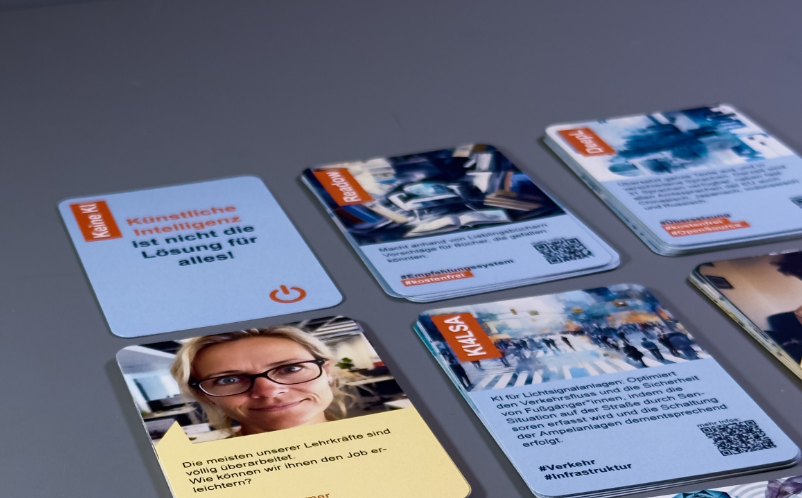
Everyone is talking about artificial intelligence (AI). But what is all the hype? Find out with this card game.

Our new handbook provides guidance on the legally compliant and efficient use of data for administrations.

Forget the “killing machine”: why AI is a question of responsibility, not apocalypse
The authors challenge the metaphor of artificial intelligence as a “killing machine” that will one day surpass its human creators.

The bot that bit back: AI agents, defamation and the digital construction of identity
A real case of an AI agent publishing a smear piece raises new legal questions about responsibility and digital identity.

The Human in the Loop in automated credit lending – Human expertise for greater fairness
How fair is automated credit lending? Where is human expertise essential?