
Are the kids alright? The protection of minors online and social media bans
The Alexander von Humboldt Institute for Internet and Society in collaboration with the Leibniz Institute for Media Research | Hans-Bredow-Institut (HBI), and the DSA Observatory, and with the support of the Network of Centres (NoC), invites you to a new series of learning calls addressing current topics related to the DSA. This online event will be held in English. It is part of the DSA Research Network, which is funded by Stiftung Mercator.
Are the kids alright? The protection of minors online and social media bans
Learning Call
Monday, 24 August 2026 • 2.00-3.00 p.m. (CET)
Online (via Zoom)

Following Australia’s ban on social media for under-16s, many other countries, such as Germany, Austria, Spain, and Great Britain, are considering similar legislation, citing the need to protect minors from the toxicity of social media platforms. In late July 2026, France became the first EU country to vote for a ban of under-15s from accessing social media. Even EU Commission president Ursula von der Leyen has announced plans to introduce widespread age verification for social media, as well as app stores, video games and other platforms. While these platforms do pose dangers to children and teenagers, such as being addictive or containing explicit content, many question the effectiveness of simply banning people under a certain age. Is it sensible to ban children and teenagers from these platforms simply because they are toxic, without addressing the toxicity itself? Do young people not have a right to participate in the public sphere, even if it is imperfect? Should the focus not be on strengthening digital literacy across all age groups rather than excluding one? There are also concerns about the technical feasibility of verifying users’ ages on the platforms, especially with regard to the compatibility with the Digital Services Act.
We address these issues and, together with experts in the field, discuss the merits of, and alternatives to an age ban for protecting minors in the digital sphere.
Speakers
Jessica Galissaire is Senior Policy Researcher in interface’s Strengthening the Digital Public Sphere and Platform Regulation programme. Her research focuses on the protection of minors in digital environments. This includes mapping and analysing current and emerging risks to minors in digital spaces, and identifying regulatory compliance requirements and gaps in existing protections.
Paddy Leerssen is a postdoctoral researcher at the University of Amsterdam’s Institute for Information Law (IViR). His research focuses on platform law and governance, with a particular focus on questions of transparency, accountability and data access. As part of the IViR’s Digital Services Act Observatory, he monitors the implementation and enforcement of the EU’s new regulatory framework for online platforms.
Moderator
Katharina Mosene is a researcher and co-project coordinator of the Human in the Loop? research project within the New Technologies and Future of Law research focus at the Alexander von Humboldt Institute for Internet and Society. She is also responsible for the substantive direction of the research project AI and Gender Equality. At the Leibniz Institute for Media Research | Hans Bredow Institute she heads the Agile Formats department. In this role, she employs innovative methods to generate knowledge, designs participatory event formats, and oversees impact-oriented science communication.
About the Learning Call Series
In this Learning Call Series, we explore the impact of the Digital Services Act (DSA) on the future of global technology policy. Across a set of focused sessions, experts examine whether restrictive regulatory models or rights-based approaches to platform governance are more likely to shape content moderation worldwide.
About the Network of Centers (NoC)
The NoC is a collaborative initiative among academic institutions with a focus on interdisciplinary research on the development, social impact, policy implications, and legal issues concerning the Internet. This collective aims to increase interoperability between participating centers in order to stimulate the creation of new cross-national, cross-disciplinary conversation, debate, teaching, learning, and engagement regarding the most pressing questions around new technologies, social change, and related policy and regulatory developments.
About the DSA Research Network
The DSA Research Network aims to establish a unique space for communication and collaboration on the implementation of the Digital Services Act, with a strong focus on making early recommendations on potential areas for reform. Following a network-based approach, the project sets out to add value to already existing initiatives that have been formed to accompany the process of implementation. By providing a platform for cross-sectoral dialogue between academics, practitioners, NGOs, and regulators, we facilitate the creation of actionable knowledge and foster a culture of collaboration.
Partners
The DSA Research Network is a collaboration between the Alexander von Humboldt Institute for Internet and Society, the Leibniz Institute for Media Research | Hans Bredow Institute, and the DSA Observatory, University of Amsterdam. It is funded by the Stiftung Mercator.

Registration
To participate in this event, please register using the form below.
You will receive the login details after registration.
If you have any questions or comments, please reach out to jella.ohnesorge@hiig.de
Bookings
Eine Anmeldung ist für diese Veranstaltung aktuell nicht möglich.
DIGITAL SOCIETY LECTURES
This high-profile lecture series thrives to develop a European perspective on the processes of transformation that our societies are currently undergoing.
DIGITALER SALON
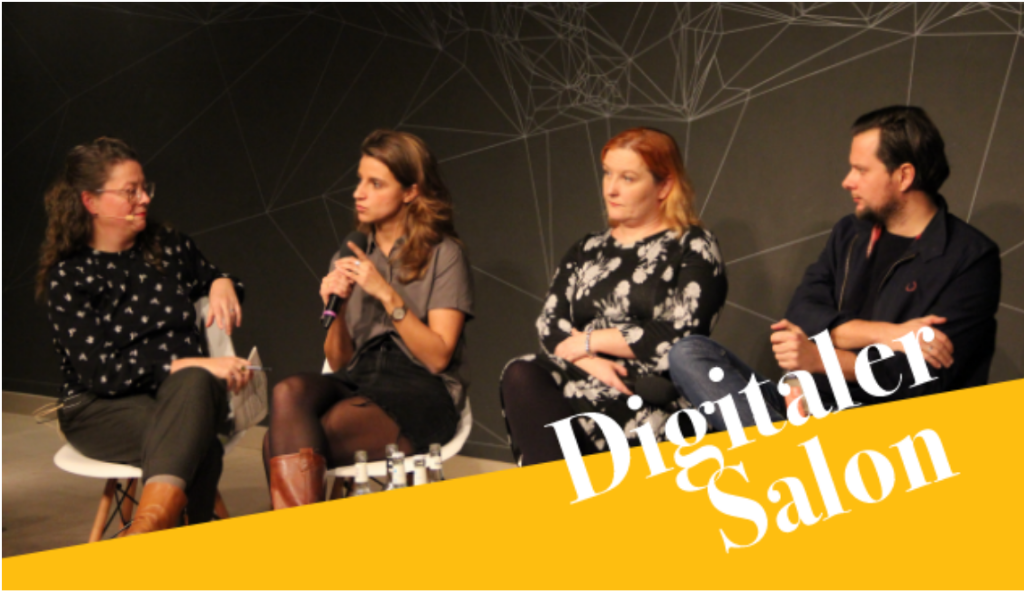
Once a month we publicly discuss the impact of digitalisation on the society. Therefore we invite special guests and engage in a dialogue with the audience.
NEWSLETTER
Be the first to learn about our new events and exciting research results.