

Digital Governance Lab
The Digital Governance Lab is an interdisciplinary interface for innovative research formats and science communication within the research focus New Technologies and the Future of Law. It serves as a space for dialogue and experimentation where insights from ongoing research are tested in practice, critically reflected upon and further developed in collaboration with societal stakeholders. The Lab focuses on how digital technologies can be shaped and regulated in society beyond purely technical solutions or exclusively legal approaches. It analyses the rules, procedures and responsibilities that structure the use of digital data, platforms and technologies.
The central question is how these structures and processes can be designed to safeguard democratic values and principles, effectively protect rights and enable innovation at the same time. The Digital Governance Lab provides a platform for exchange between academia, politics, public administration, business and civil society to discuss and apply scientific knowledge in practice.

Maurice Stenzel, Dr.

New Technologies and the Future of Law
We examine when, how and by whom rules for technological innovations such as artificial intelligence, brain-computer interfaces and quantum technologies should be set. How can robust governance frameworks be implemented to achieve this?
Platform Governance
Rules of digital public spheres
Digital platforms are key spaces of public communication. Rules, design choices and moderation practices shape how communication takes place, which content becomes visible and which content is restricted.
Data Governance
Data, actors and infrastructures
Data form a central foundation of digital services and societal decision-making processes. Their use enables innovation and new forms of participation while simultaneously raising questions of responsibility, security and fairness.
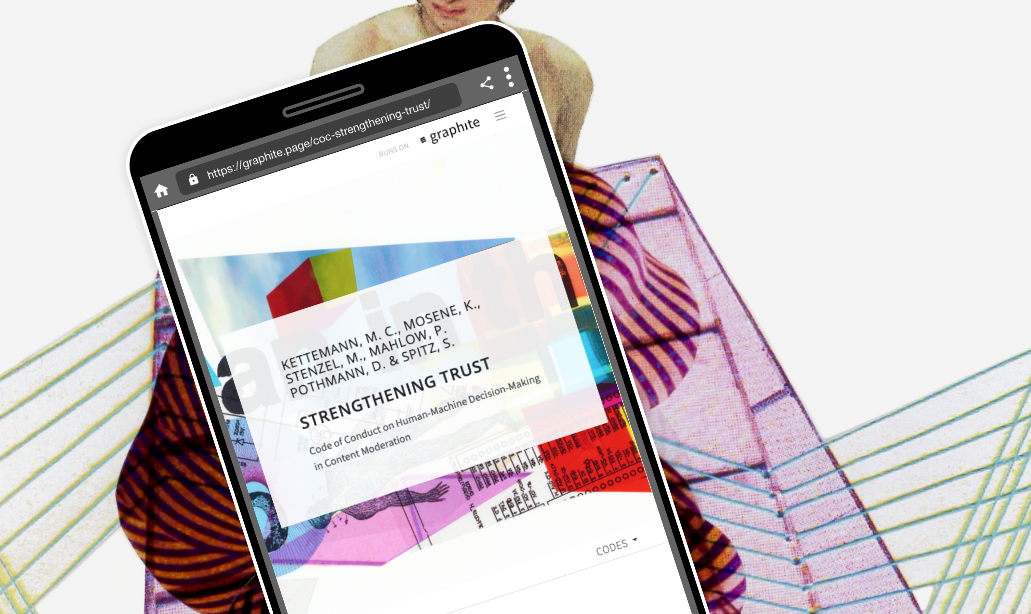
Code of Conduct: Strengthening Trust
This Code of Conduct addresses both platform operators and actors in EU policymaking. It defines ten guidelines for fair, transparent and accountable moderation processes on social media platforms. Its implementation aims to strengthen trust in human–machine decision-making in content moderation on digital platforms.
The Code of Conduct was developed in collaboration with experts as part of the Human in the Loop? research project.
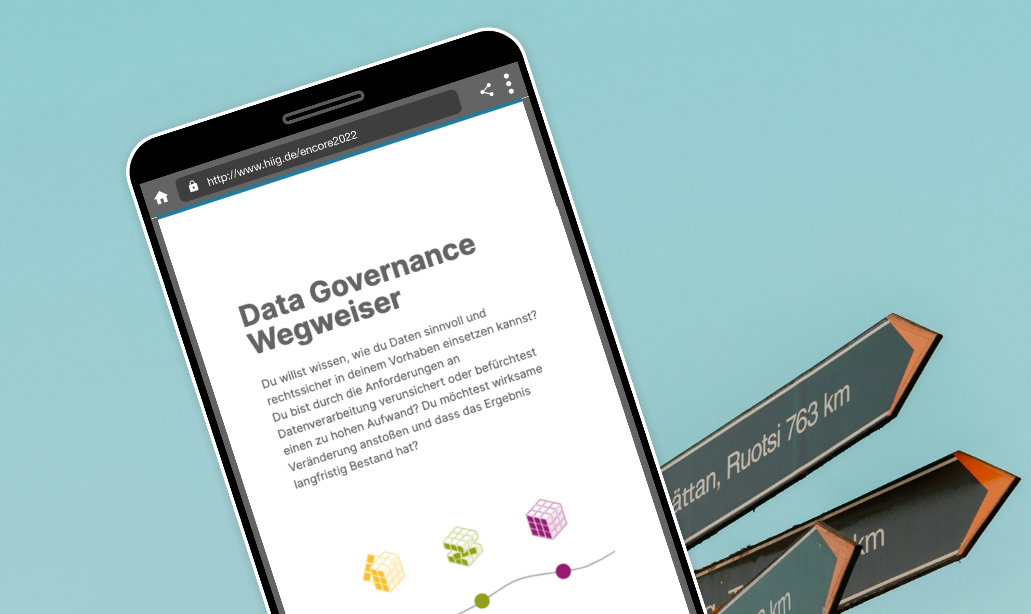
Data Governance Guide
In many municipalities the potential of data remains underused. Our digital handbook supports public administrations in systematically planning and implementing data-driven projects – legally sound, sustainable and mindful of the interests of business, politics and civil society.
The Data Governance Guide was developed within the research project Data & Smart City Governance. A revised and expanded edition will be published as a book (expected summer 2026).

Consenter
For informed consent and privacy online: A browser plugin lets users set their privacy and cookie preferences once and apply them automatically. A cookie banner helps website providers achieve genuine GDPR compliance in line with the state of the art.
Consenter was developed by the academic spin-off Law & Innovation Technology, based on interdisciplinary research at HIIG.

Your data. Your choice?
This learning kit explains to young people how online personalisation based on their data works and what benefits and risks it brings. The aim is to help them decide for themselves which data they share online and which they keep private.
These Open Educational Resources were developed as part of the research project Safe in Data Traffic.
brAIn fail
Whether on social media, in law enforcement or in aviation: this escape game shows students where we already use automated systems to make decisions for us. They learn that even the best AI systems need humans who recognise their limits.
The game is being developed by the end of 2026 as part of the research project Human in the Loop?.

Digitaler Salon: Hätte ich das nur früher gewusst ...
In September, the Digital Salon will discuss how we can manage our data in a self-determined way, and the skills needed to do so.
30.09.2026

Ich sehe was, was du nicht siehst: Personalisierung im Internet verständlich erklären
This event will present and discuss the educational materials that were developed as part of the 'Safe in data traffic' project.
30.09.2026

Spotlight: Generative KI in der Arbeitswelt
The Spotlight offers insights into the key findings of the three-year research project. These include specific use cases and the impact of generative AI on employees and businesses.
29.09.2026

Webinar: Generative KI in Kommunikation und Marketing
In this webinar, we will outline the ten most important factors influencing the use of GenAI, and demonstrate which levers companies can actually pull.
24.09.2026

Risks of Personalized Content on the Internet – Research Findings in Dialogue
This workshop will explore how a newly developed risk model can help users to make informed decisions regarding their personal data.
04.09.2026

Workshop: More Successful Advertising Through More Informed Decisions
This workshop presents and discusses proposed solutions for managing personal data from the user’s perspective with experts from the fields of data protection, consumer protection and the digital economy.
01.09.2026

Are the kids alright? The protection of minors online and social media bans
This learning call, led by experts in the field, discusses the merits of and alternatives to an age ban for protecting minors in the digital sphere.
24.08.2026

Explaining personalisation on the internet in simple terms
In this workshop, educational materials on personalisation on the internet (using advertising as an example) will be discussed and further developed.
21.07.2026

GenAI and the DSA’s Systemic Risk Framework
This Learning Call will examine gender-based violence in the context of the Digital Services Act (DSA) systemic risks framework.
25.06.2026

The Digital Services Act as a tool for tackling gender-based digital violence
...relevant as ever. This Learning Call will examine gender-based violence in the context of the Digital Services Act (DSA) systemic risks framework. The discussion will explore how gender-based violence may...
13.05.2026

Under pressure: The DSA as source of transatlantic tensions
We explore the transatlantic tensions surrounding the EU’s Digital Services Act and examine their political implications for the DSA’s future.
18.03.2026

Explore how personalised advertising works
The workshop will explore how young people can be taught about data security in a playful way.
17.03.2026

Digitaler Salon: Unfreiwillig & Selbstbestimmt
In the January issue, we discuss cookie banners, the consent dilemma and ways to protect our data more effectively.
28.01.2026

Humans & machines in (dis)harmony? – A walk through content moderation
A tour of our case study on (partially) automated decision-making processes in the context of content moderation.
03.11.2025

Overcoming the digital backlog in German municipalities through data governance (II)
This digital learning call is about HIIG's new Data Governance Guide - date option 20 May 2025.
20.05.2025
Overcoming the digital backlog in German municipalities through data governance (I)
This digital learning call is about HIIG's new Data Governance Guide - date option 14 May 2025.
14.05.2025

Workshop on Micro-Credentials about Data
This workshop offers an insight into the foundation module of the micro-credential course “Mastering Data”.
08.11.2024

Zukunft der Content Moderation durch effektive Mensch-Maschine-Kollaboration
...wissenschaftliche Team mit Expert*innen und relevanten Stakeholdern aus dem Feld ins Gespräch kommen möchte. Im Fokus stehen Modelle der Mensch-Maschine-Interaktion und die Erarbeitung von Vorschlägen für optimale Content Governance-Ansätze vor...
07.10.2024

Accept or Decline? Personalized Advertising and Content on the Internet
This citizens' workshop is about your perception of and opinion on personalised advertising and content on the internet.
09.08.2024

Bridging the gap: Safeguarding Online Freedom Across the Atlantic
Experts discuss the interplay between communication rights and freedom of expression on the internet at a panel discussion in New York.
29.04.2024

Laboratory for citizen participation: Better air quality through a traffic turnaround?
We would like to develop ideas with them in an active workshop on what ideal citizen participation should look like in the future.
25.11.2023

Experts Dialogue | Data models in public administration
The Alexander von Humboldt Institut für Internet und Gesellschaft organises an experts dialogue as part...
08.09.2023

Threats to Democracy: Climate Misinformation and Gender Related Disinformation
...of climate action are consequences. Balancing the need to counter harmful content with protecting freedom of expression and privacy raises important questions. Gender-based disinformation and climate misinformation exploit emotional responses...
20.07.2023
Advice from the advisory board: Potential of social media councils
This Deep Dive addresses the question of how platform councils can help strengthen the role of public interests, human rights, and values in the digital space.
27.06.2023

Potentials of Small Tech: What can we learn from the small platforms?
This Deep Dive looks at governance and regulation of digital platforms beyond the so-called "Big Five" dominant tech companies.
16.05.2023

Decentralisation as Democratisation: Mastodon instead of Platform Power
This Deep Dive covers the discussion around common-good-oriented platforms in the Fediverse and various independent decentralized services like Mastodon.
18.04.2023
Digital Society Blog
Here, our institute's researchers write about the key questions facing digital society. Read articles on topics such as AI, democracy, work, knowledge, platform regulation and sustainability.