

AI & Society Lab
The AI & Society Lab is an interdisciplinary interface and experimental space within the Societal Values, Transformation and Artificial Intelligence research focus. It brings together academic insights on artificial intelligence (AI) and puts them into practice, developing new formats that address social, political and cultural issues. Our work centres on the question of how AI systems can be designed, deployed and regulated in ways that align with societal values, democratic principles and human rights standards. The Lab understands AI not as a purely technical innovation, but as a socio-technical phenomenon: technologies are embedded in social contexts, designed by humans, and continuously interact with human action. AI systems therefore do not emerge independently of society; rather, they are shaped by values, norms and political frameworks, and in turn reflect them.
Based on this understanding, the AI & Society Lab positions itself as a thought leader and driver of inclusive, human rights-compliant and sustainable AI development. It actively promotes dialogue between science and society. Workshops with various interest groups, public events and media formats are used to discuss, test and further develop scientific findings.

Theresa Züger, Dr.

Societal Values, Transformation and Artificial Intelligence
Our research critically analyses socio-technical transformation processes. It centres on the question of how digital technologies can be more closely aligned with societal goals – particularly with regard to sustainability, the public interest and democratic values.
Explainability of AI
Understanding automated decisions
AI systems often lack transparency. Different approaches to explainability demonstrate how such systems function and the assumptions on which they are based. This enables us to critically examine AI and make informed decisions in politics, public administration and society.
AI, Sustainability and the Public Interest
Benefits for society
The use of Artificial Intelligence raises questions about its long-term social, ecological and institutional impacts. Public interest–oriented AI means that the development and deployment of AI systems are not primarily driven by profit maximisation or private interests, but by benefits for society as a whole.
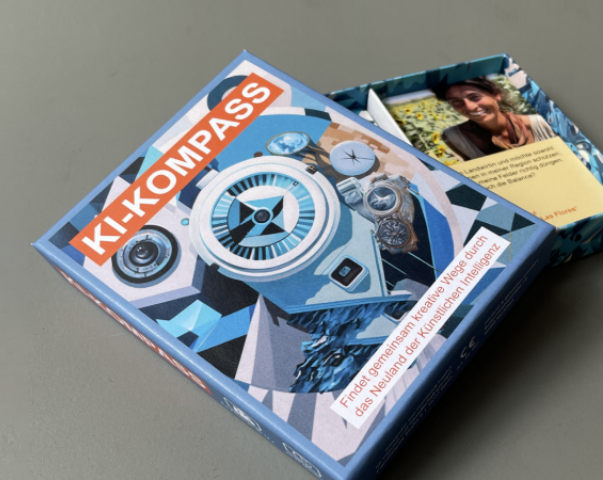
AI-Compass
This card game offers a realistic insight into the use of active AI systems in society. Developed using a transdisciplinary approach with citizens and experts, it provides an accessible introduction to artificial intelligence and its societal implications.
The AI Compass is an outcome of the research project Artificial intelligence, explained in human terms.
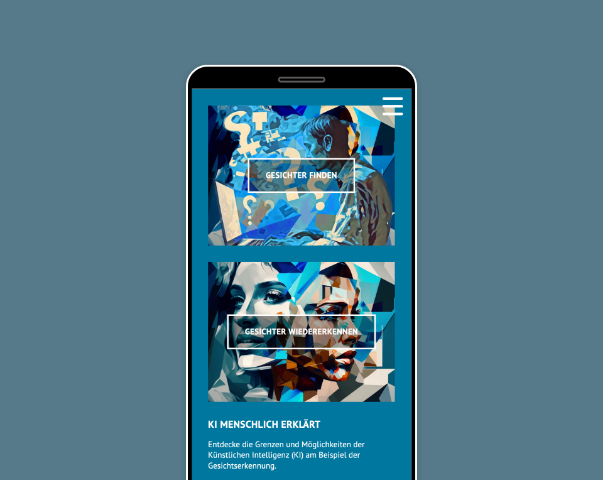
Experiment: Face recognition
This open-source application uses a playful approach to demonstrate how facial recognition software works. It aims to make basic AI knowledge understandable and accessible, while highlighting the capabilities and limitations of such systems.
The experiment was developed as part of the research project Artificial intelligence, explained in human terms.
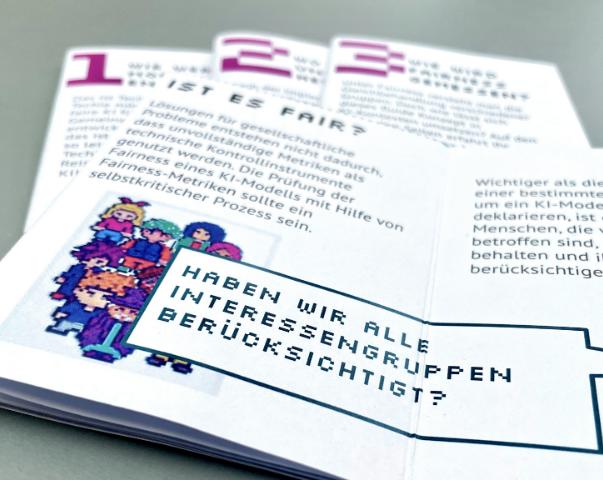
Feels Fair?
These zines for teachers, students and professionals explore key aspects of fairness and artificial intelligence step by step. The materials explain how AI models are developed and trained and examine which distortions, known as biases, can influence AI-driven decisions.
The zines are outcomes of the research project Public Interest AI.
Public Interest AI Interface and Network
What constitutes public interest–oriented AI is both complex and socially relevant. Researchers and a network of diverse societal actors engage in a shared dialogue to clarify key concepts and distinctions. This interface presents the principles developed through this process, inviting further discussion and knowledge exchange.
The interface, the project map and the two AI prototypes are key results of the the Public Interest AI research project.

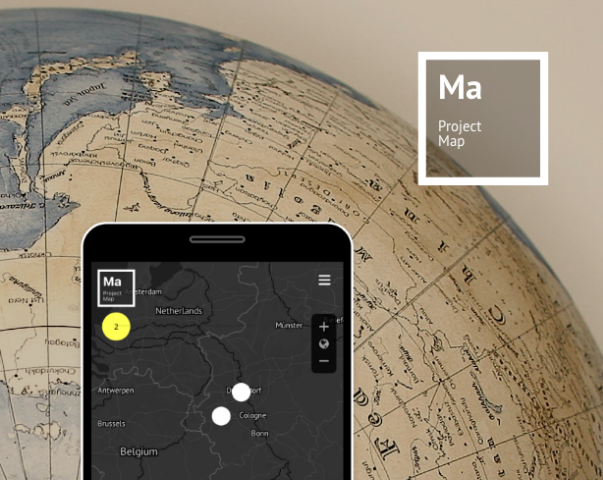
Public Interest AI Project Map
This interactive map provides an overview of AI initiatives worldwide that are oriented towards the public interest. It illustrates how these projects function, how they present their work, and how they perceive themselves, while making information freely accessible.
Simba Text Assistant
This AI prototype comprises two applications designed to help people understand German-language online texts. One application is a web app that selectively simplifies users' own texts, while the other is a browser extension that automatically summarises online content.

Claimspotting
This AI prototype is a monitoring application designed to support fact-checkers in reviewing content on Telegram. The words "claim" and "spotting" refer to the identification of statements that may contain potential misinformation.
Sustainable support of public interest AI
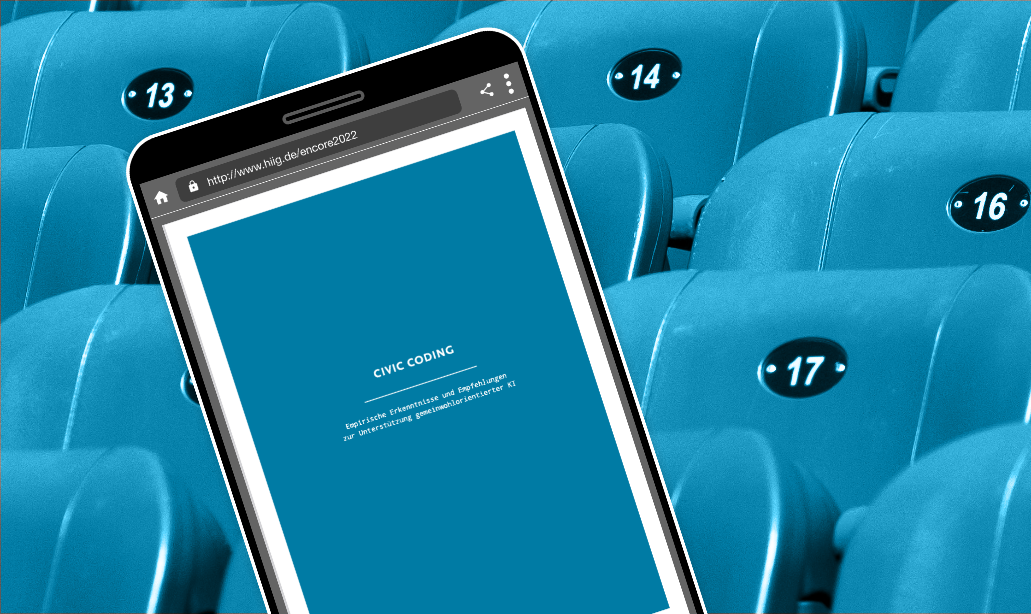
This policy paper sets out 16 recommendations aimed at fostering sustainable support for AI in the public interest. This work was commissioned as part of the Civic Coding initiative.
The policy paper is based on empirical findings from the study „Civic Coding – Grundlagen und empirische Einblicke zur Unterstützung gemeinwohlorientierter KI”.
Diversity as a Future Factor
This position paper by the AI and Women* roundtable presents ideas and demands for more diverse AI development, with a particular focus on increasing the participation of women* in AI design and development processes. It is based on contributions and discussions involving 20 representatives from academia, industry, politics and civil society.
The roundtable took place on 13 October 2020 and was hosted by the Alexander von Humboldt Institute for Internet and Society, together with the Representation of the European Commission in Germany.


Omnipresent & hidden: Impact, costs, and futures of AI
In this workshop, you can critically discuss with experts the costs & impacts AI systems create for societies & the planet.
29.10.2025

What is AI4Good?
In this two-part workshop as part of the transform_d Summit, AI4Good projects are invited to present and discuss their use cases.
28.03.2025

Workshop on Micro-Credentials about Artificial Intelligence
This workshop offers an insight into the foundation module of the micro-credential course “Unpacking AI”.
08.11.2024

Interactive Workshop: AI explained in human terms
In this workshop you can explore two explanatory models for a better understanding of AI.
27.09.2023

Webinar II: Mapping Public Interest AI
Learn about AI in the public interest & join our collective project.
24.08.2023

Webinar I: Mapping Public Interest AI
Learn about AI in the public interest & join our collective project.
22.08.2023

Hackathon I Developing explanatory models for AI
Within this workshop we will look at artificial thinking and how we can explain it in human terms.
03.02.2023

Digitaler Salon: Green Surveillance
We ask if and how digital solutions can contribute to the protection of exisiting forests and rebuilding of lost ones.
25.01.2023

Workshop II Artificial thinking explained in human terms
Within this workshop we will look at artificial thinking and how we can explain it in human terms.
20.10.2022

Workshop I Artificial thinking explained in human terms
Within this workshop we will look at artificial thinking and how we can explain it in human terms.
02.09.2022

EDIT-A-THON Intersectional AI Toolkit
A co-creation workshop on intersectional approaches to AI, organized in cooperation with our partners from Motif, netzforma* and SUPERRR.
01.09.2021

Roundtable IV: AI and Women*
The aim of this event series is to continue the exchange between different interest groups on the topic of AI on the basis of concrete practical examples.
13.10.2020

Roundtable III: AI and Sustainability
AI and climate - (how) do they fit together? Economic growth vs. sustainability - what focus does European AI need? This roundtable workshop event by AI & Society Lab discusses the topic of AI and sustainability.
21.09.2020

Roundtable II: Inclusive AI
The aim of this event series is to continue the exchange between different interest groups on the topic of AI on the basis of concrete practical examples.
10.09.2020

1st Pop-Up Lab: Inclusive AI? The challenges of automated tools in HR
The aim of this event series is to continue the exchange between different interest groups on the topic of AI on the basis of concrete practical examples.
24.08.2020

Roundtable I: AI and IoT
The aim of this event series is to continue the exchange between different interest groups on the topic of AI on the basis of concrete practical examples.
19.08.2020