
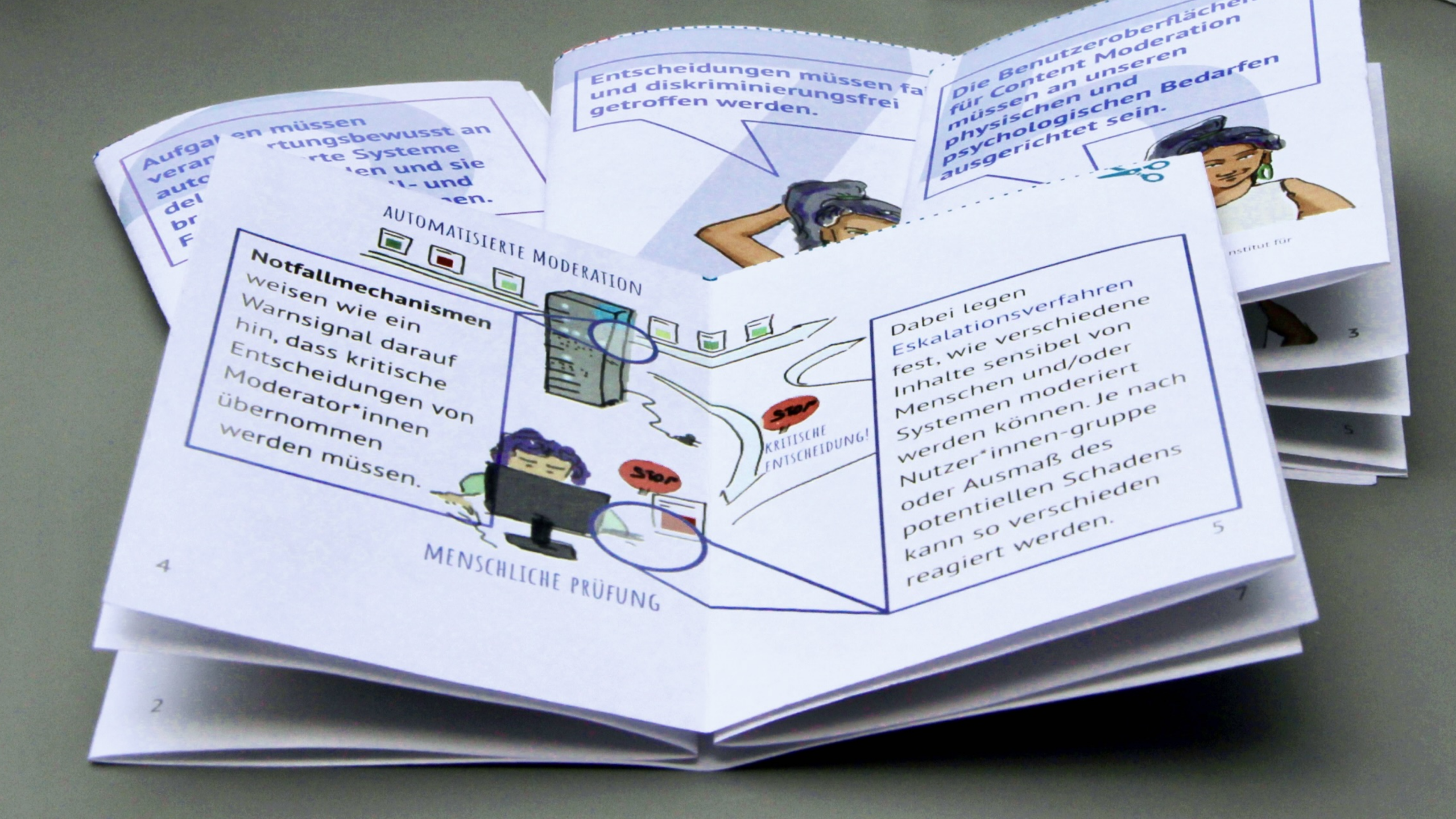
Zines on Fair Content Moderation
How Humans and Machines Make Responsible Decisions
Every day, millions of pieces of content are reviewed on platforms such as YouTube, Instagram and TikTok to check whether they breach the rules, for example by containing hate speech, discriminating against certain groups or spreading disinformation. This process, known as 'content moderation', involves a combination of human moderators and technical systems. But how exactly does this collaboration between humans and machines work? Who is responsible for ensuring fair decisions and fair working conditions? And why do mistakes keep happening?
Our zines shed light on these moderation processes, making them transparent and easy to understand. They are aimed at students, lecturers, civil society organisation staff and policymakers who already have a basic understanding of digital platforms and wish to delve deeper into the issues surrounding fair content moderation.
Eleven Zines for Transparent Content Moderation
The Zine series is based on a Code of Code of Conduct on Human-Machine Decision-Making in Content Moderation. This code was developed as part of the Human in the Loop project.
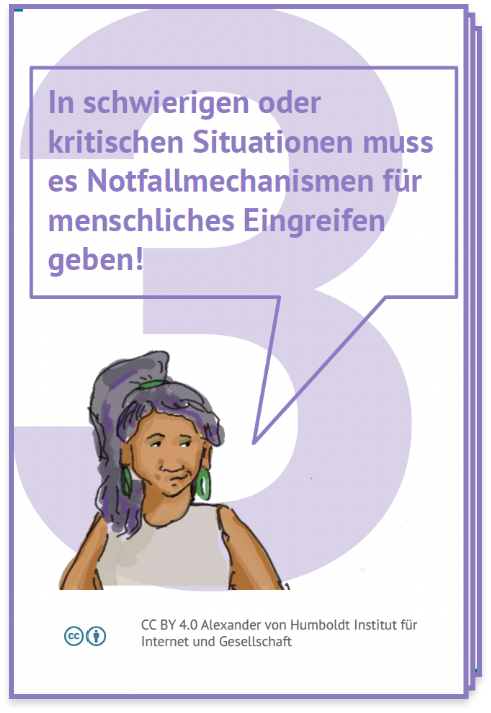
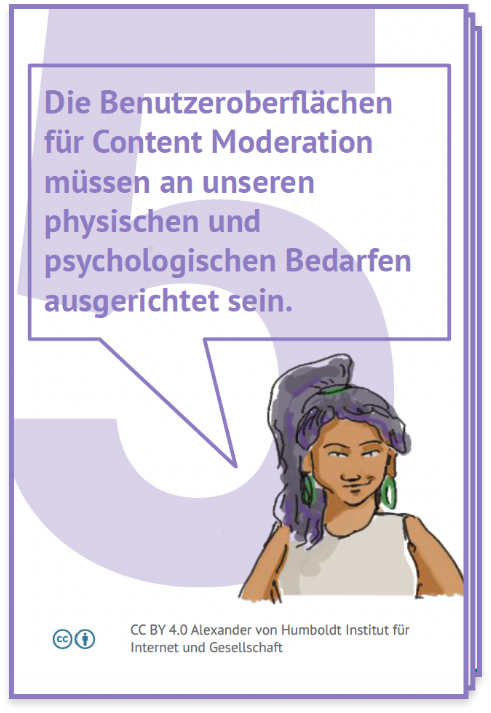
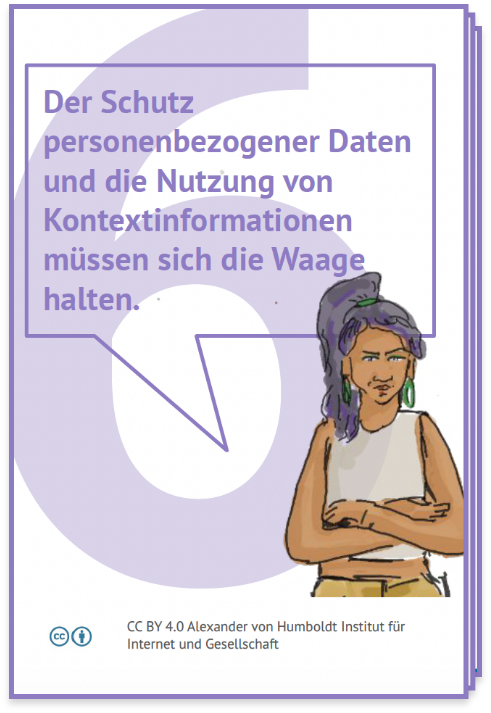
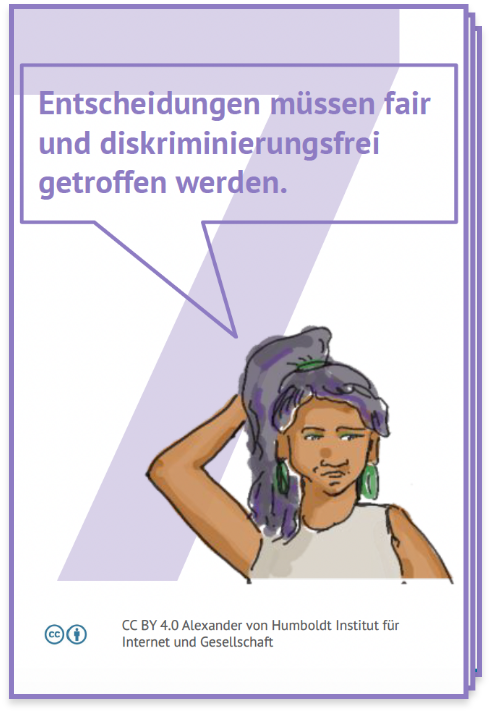
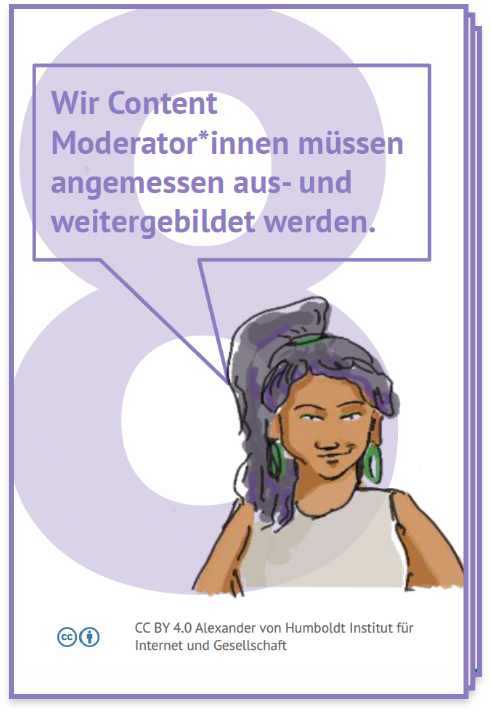
An introduction to content moderation, a general overview as well as an explanation of key terms in a glossary is provided by Zine 0. Zines 1 to 10 each focus on one of the ten codes of the Code of Conduct. Throughout the series, we follow Ari, a content moderator, through their daily work on a major platform. Together with Ari, readers can explore key questions of responsible moderation: Which tasks are handled by automated systems, and where does human judgement remain indispensable? Where do risks, biases or power imbalances arise? What structural conditions must be met to ensure that moderation remains fair and transparent? The zines can be read as a complete series or individually. In any case, however, it is recommended to start with Zine 0.
For now the zines are only available in German. We are working on an English version, which will be published here as soon as it is ready.



Why Zines?
Zines, pronounced like the ending of “magazine”, are part of counterculture history. These self-published, small-format, artwork publications can be printed in small quantities and distributed widely. They fit in any pocket — and that's exactly what should matter when it comes to dominant discourses in our society. If we want everyone affected by these discourses to have a say, the necessary knowledge must be accessible to all.
Why is fair Content Moderation important?
The purpose of content moderation is to protect our fundamental rights online and make digital platforms safer. Hate speech, disinformation, and harmful content are supposed to be identified and removed. However, the reality is far more complex. Automated systems sometimes delete legitimate content or overlook problematic material. Human moderators are often overburdened and work under stressful conditions. They must judge content from foreign cultural contexts in a short amount of time. These factors lead to biases that systematically disadvantage certain groups and languages. Those who decide what remains visible and what is deleted significantly influence public communication and social participation. Therefore, it is crucial that moderation processes are fair, transparent, and accountable. Fair content moderation is a societal responsibility that affects us all, not merely a technical issue. A key approach to addressing this issue is developing shared codes of conduct that provide guidance and clearly define responsibilities in human-machine interactions.
Where can the zines be used?

The Zines are intended for anyone interested in the regulation of digital platforms, algorithmic decision-making, or the implementation of codes of conduct. They are ideal for use in educational settings, such as workshops, seminars, and training sessions, where complex issues surrounding content moderation are made accessible and open to discussion. A basic understanding of digital platforms and their role in society is prerequisite.

Sarah Spitz

Human in the Loop?
This open educational resource is published under the terms of the CC BY-NC-SA 4.0 Licence which permits unrestricted use, provided the original work is properly cited.
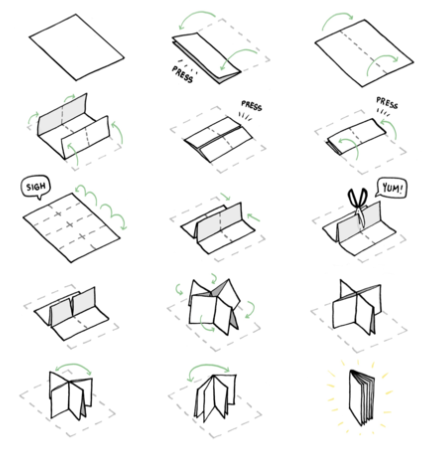
The zines are double-sided: there is a poster on one side of the sheet and the pages of the zine on the other. These instructions will help you to fold the zines to turn an A4 sheet of paper into a readable little book. You can open it again at any time to read the poster page.
HIIG is continuously developing a wide range of OER, including a lecture series, a future thinking toolkit and several games.