
Making sense of our connected world

1st Berlin Colloquium – Workshop “Open Software & Open Design”
This workshop was marked by an interdisciplinary approach: A lawyer examined software interoperability, a sociologist explored developments in the field of open design and a computer scientist moderated the discussion.
In the first part of the workshop Begoña González Otero (Max Planck Institute for Intellectual Property and Competition Law, Munich) presented the findings of her PhD: Compelling to Disclose Software Interoperable Information: Risk for Innovation or Balanced Solution? She noted that software standards are in “a bit of a mess”. Software interoperability is needed so that programs can interact with each other and products can function together. However, in practice we often find compatibility instead of interoperability. The Digital Agenda for Europe 2010-2020 is working on improving and promoting the enhancement of interoperability. One highlighted recommendation is the revision of the Software Directive and its exceptions so as to enable interoperability without infringing the balance between copyright and competition law.
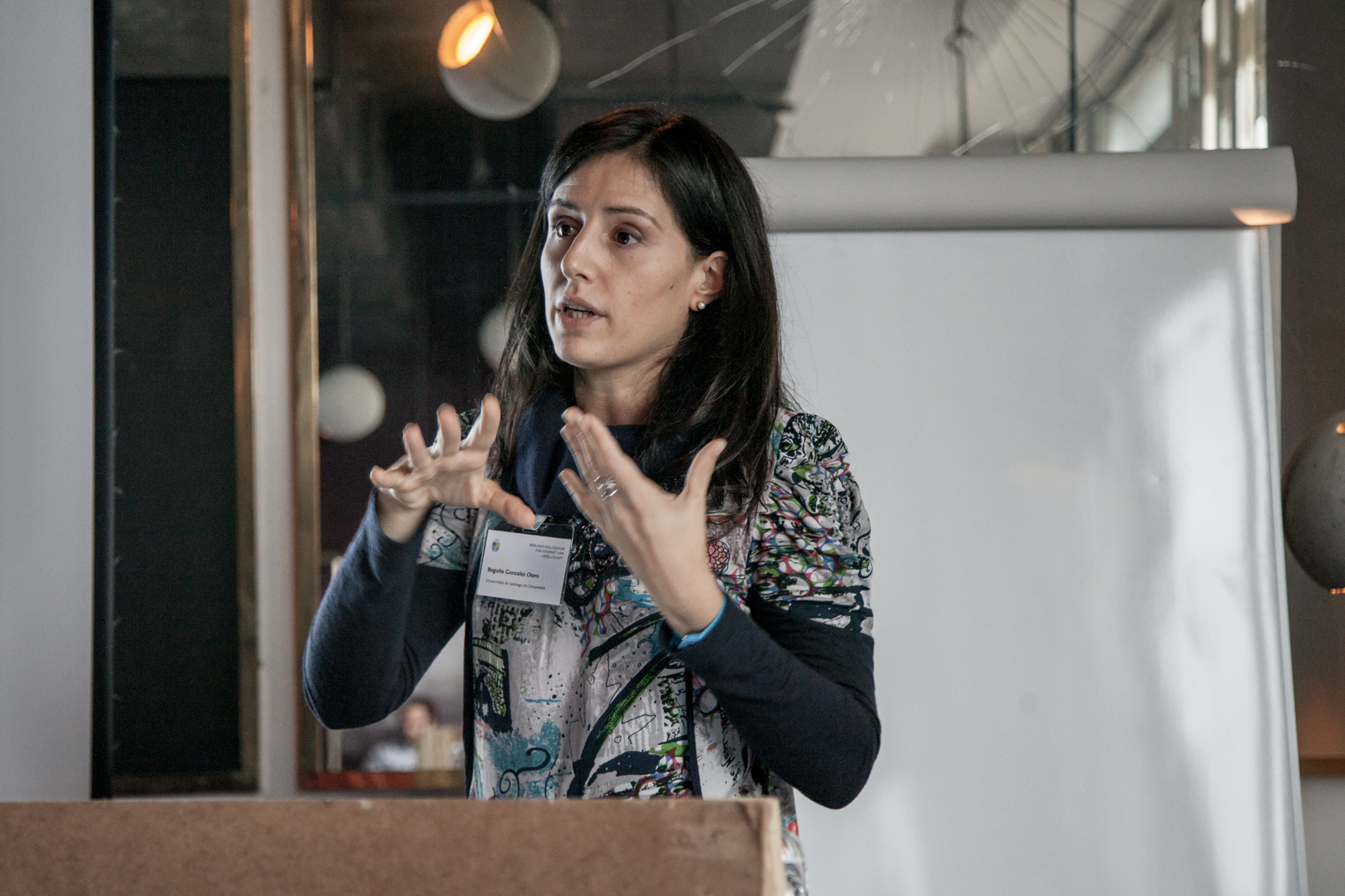
Begoña González Otero – by videobuero.de
In the second part of the workshop Christoph Schneider (Institute for Technology Assessment and Systems Analysis, Karlsruhe) introduced his PhD project: Concrete utopias of an open technology: The practices and futures of open design. He observes a shift from open source initiatives in the digital world to the tangible world. Fablabs, Hackerspaces or the MakerBot Industries are just a few examples. This shift opens up new paradigms for innovation. In his PhD project Christoph Schneider explores the interrelationship of visions and objects. How do visions of futures and technologies translate into open design practices? In this context objects are perceived as being in a fluid state and have a social life attributed to them. What happens to objects as they move from one stage to another? Moreover, objects have the potential to synchronise people when acquiring skills, sharing knowledge and solving problems. How is knowledge circulated in open design structures?
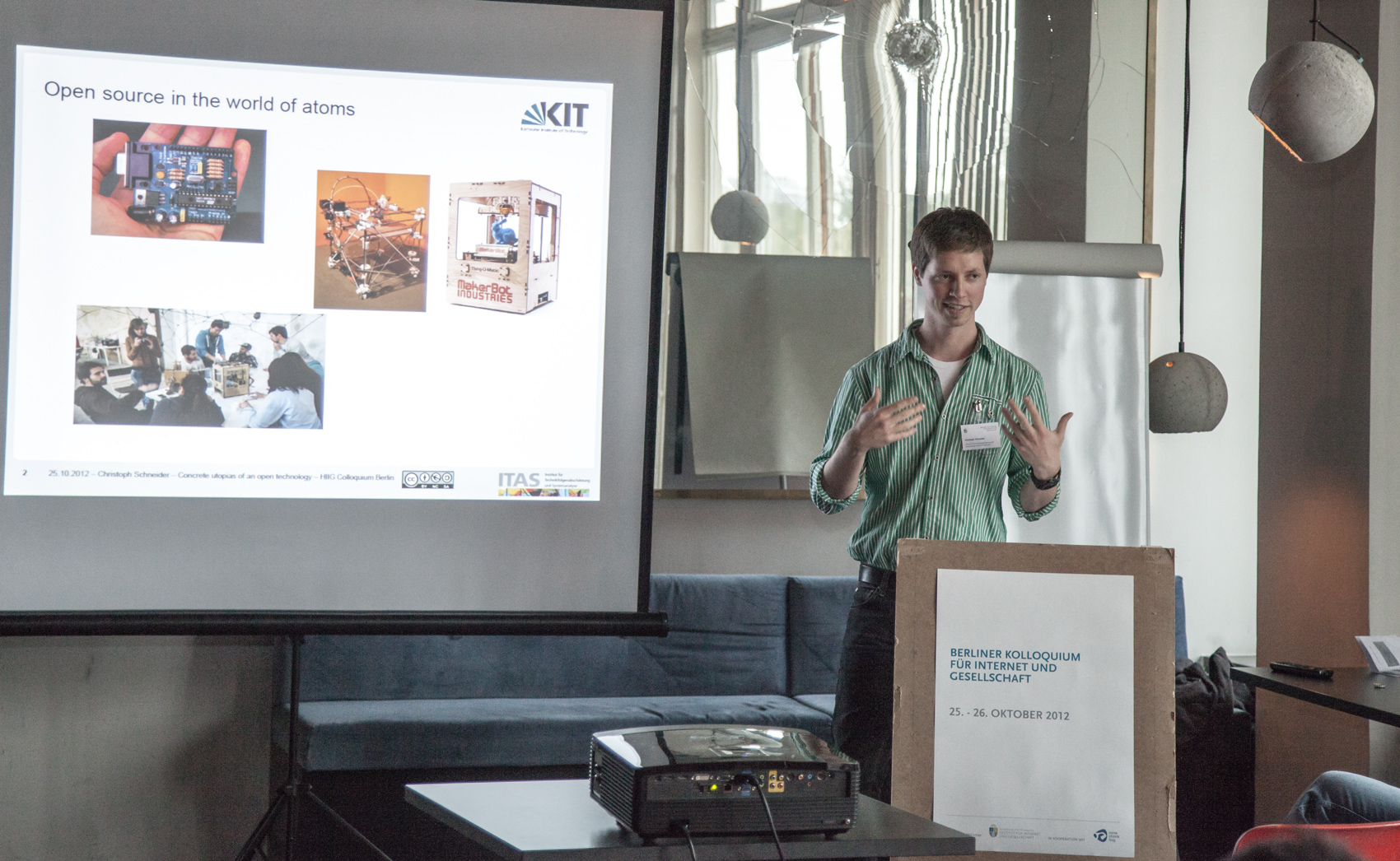
Christoph Schneider – by videobuero.de
To put this approach in a nutshell: “The future is open source everything” (Linus Torvalds).
This post represents the view of the author and does not necessarily represent the view of the institute itself. For more information about the topics of these articles and associated research projects, please contact info@hiig.de.

You will receive our latest blog articles once a month in a newsletter.

#TaxTheRich: How do members of the German Bundestag debate wealth taxation on social media?
Germany’s Constitutional Court is reviewing the inheritance tax. A study shows how members of the Bundestag argue online.
Enforcing the Digital Services Act: A cat & mouse game?
The Digital Services Act has been in force for two years. Is it working as expected? A look at enforcement progress and geopolitical influences.

AI startups made in Germany — Specialisation instead of computing power
What role do AI startups play in Germany’s position in the global AI race? This article draws on ten interviews to offer insight into their business models.